State variations in skill element approvals reshape digital reel mechanics across licensed US platforms
Drew Vogel · Jul 16, 2026
State variations in skill element approvals reshape digital reel mechanics across licensed US platforms
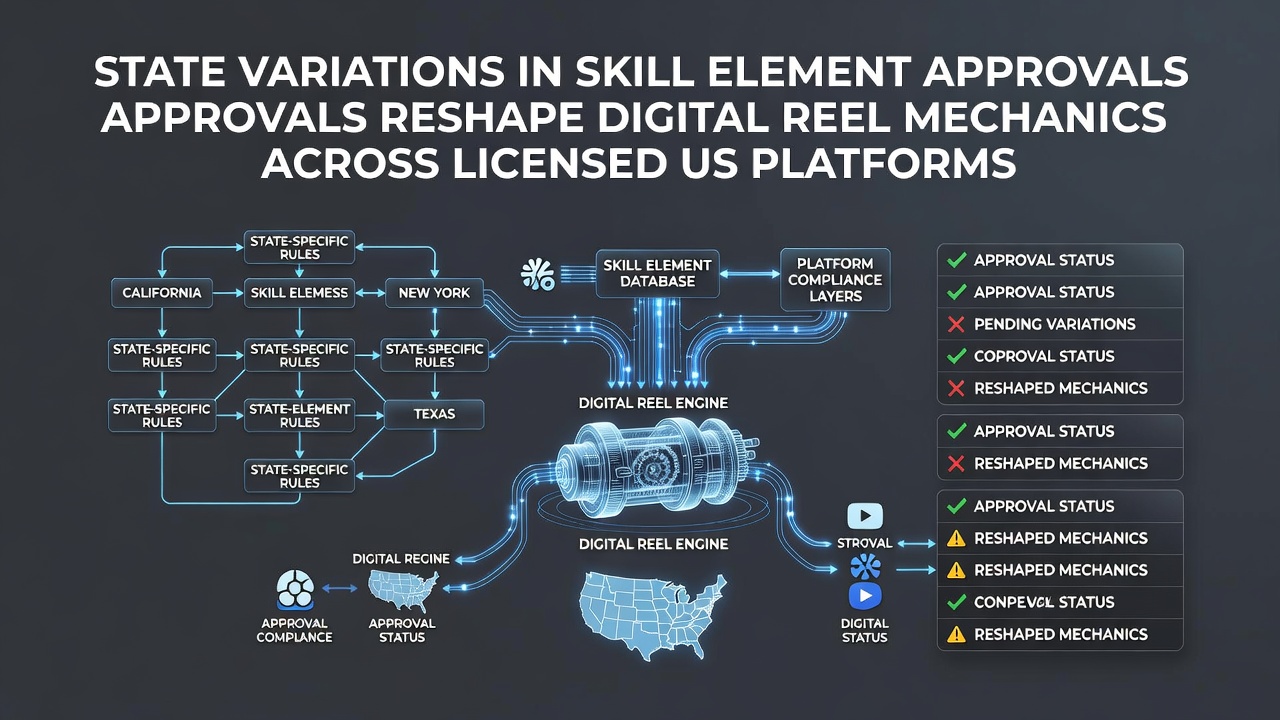
State regulators across the United States have begun applying distinct criteria when evaluating skill elements in digital slot games, which in turn alters reel configurations, symbol weighting, and bonus round structures on platforms licensed in those jurisdictions. These differences emerged more clearly during the first half of 2026, prompting software providers to maintain separate game versions for each market rather than relying on a single nationwide build.
Approval frameworks differ by jurisdiction
New Jersey's Division of Gaming Enforcement requires extensive documentation showing that any skill component operates independently of the base game's random number generator, while Michigan's Gaming Control Board permits limited integration provided overall return-to-player percentages remain within published ranges. Pennsylvania's regulators, by contrast, focus on disclosure requirements that list the exact probability shifts introduced when players exercise skill choices during bonus sequences. Observers note that these divergent standards force developers to recalibrate reel strips, adjust hit frequencies, and sometimes remove entire feature layers before submitting titles for certification.
Reel mechanics adapt to local rules
Because each state demands unique compliance documentation, studios now segment their development pipelines by regulatory region. In markets that treat skill elements as separate from chance-based reels, designers increase the number of low-value symbols on the main reels to offset potential player advantages gained during interactive bonus rounds. States that fold skill performance into overall game mathematics often see tighter reel variance and fewer near-miss configurations, since regulators review the combined outcome distribution. Data from multi-state operators indicate that titles released simultaneously in three or more jurisdictions carry an average of 14 percent more distinct reel strip variations than those offered in a single market.
One developer that supplies games to both New Jersey and Michigan platforms reported maintaining six separate reel layouts for a single base game title, each tuned to satisfy the skill approval pathway required by the respective commission. These adjustments affect not only symbol distribution but also animation timing, since certain states limit how quickly skill prompts can appear after a reel stop.
Testing and certification timelines extend
Independent testing laboratories must now run additional simulation batches that isolate skill sequences from standard spin outcomes. This requirement lengthens certification cycles by three to five weeks on average, according to figures released by the Pennsylvania Gaming Control Board in its June 2026 compliance summary. Laboratories report that states accepting combined mathematics models demand fewer test cases, while those requiring full separation of skill and chance components request exhaustive logging of every decision path a player might select.
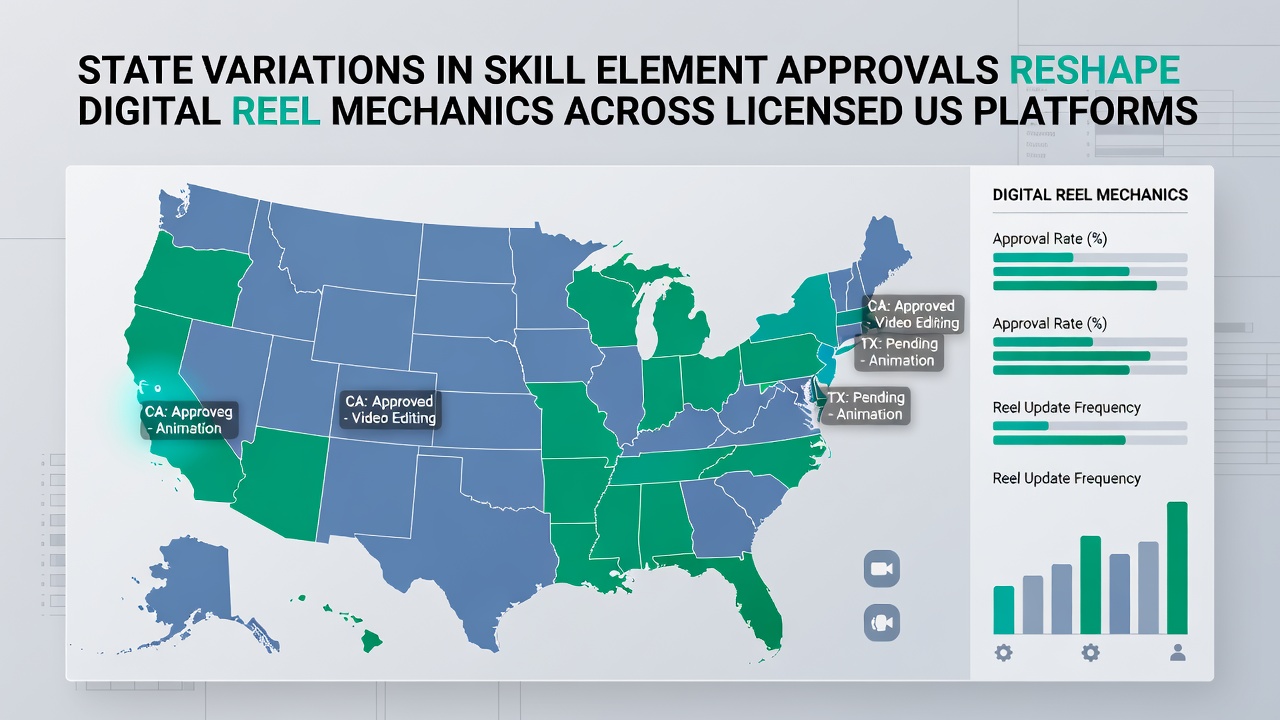
Platforms operating across state lines therefore schedule staggered release dates, allowing each version to clear its local review process before broader deployment. This staggered approach reduces the risk of a single rejected build halting distribution in multiple regulated markets simultaneously.
Player interface changes follow regulatory splits
Because reel mechanics shift to accommodate different skill rules, the visible game experience also diverges. Players in one state may encounter bonus triggers that display explicit probability meters tied to their choices, whereas users in another jurisdiction see only outcome summaries after the round concludes. Touchscreen response windows, button layouts, and even the number of selectable options during skill segments vary accordingly. These interface distinctions arise directly from the documentation each state demands rather than from creative preference.
Research compiled by the American Gaming Association shows that operators serving multiple states allocate additional server resources to route players to the correct regional build based on geolocation verification at login. The routing layer checks the player's physical location against a continuously updated matrix of approved game files, ensuring that only the version matching the local skill-element rules loads.
Industry response and ongoing adjustments
Software suppliers have formed dedicated compliance teams that track rule changes announced by each gaming commission. These teams maintain internal databases that map every approved skill mechanic to its corresponding reel configuration, allowing rapid updates when a state modifies its evaluation criteria. During July 2026 several providers released patch notes detailing reel adjustments made after regulators in two additional states clarified their positions on hybrid chance-skill games. The patches altered symbol frequencies and bonus trigger rates without changing the core theme or artwork of the affected titles.
Operators report that maintaining these parallel versions increases storage and bandwidth costs, yet they view the expense as necessary to remain active in every licensed market. Cross-border play remains restricted, so each state platform operates its own isolated game library that reflects only the approvals granted within its borders.
Conclusion
State-level differences in how skill elements receive approval continue to drive distinct reel designs and interface features across licensed US platforms. Developers respond by creating multiple certified versions of the same title, while operators implement location-based routing systems that deliver the appropriate build to each player. As additional jurisdictions finalize their frameworks, further segmentation of digital reel mechanics appears likely through the remainder of 2026 and beyond.