How Regional Banking Regulations Shape Withdrawal Timelines for Players Using State-Approved Casino Platforms
Rosa Klein · Jul 25, 2026
How Regional Banking Regulations Shape Withdrawal Timelines for Players Using State-Approved Casino Platforms
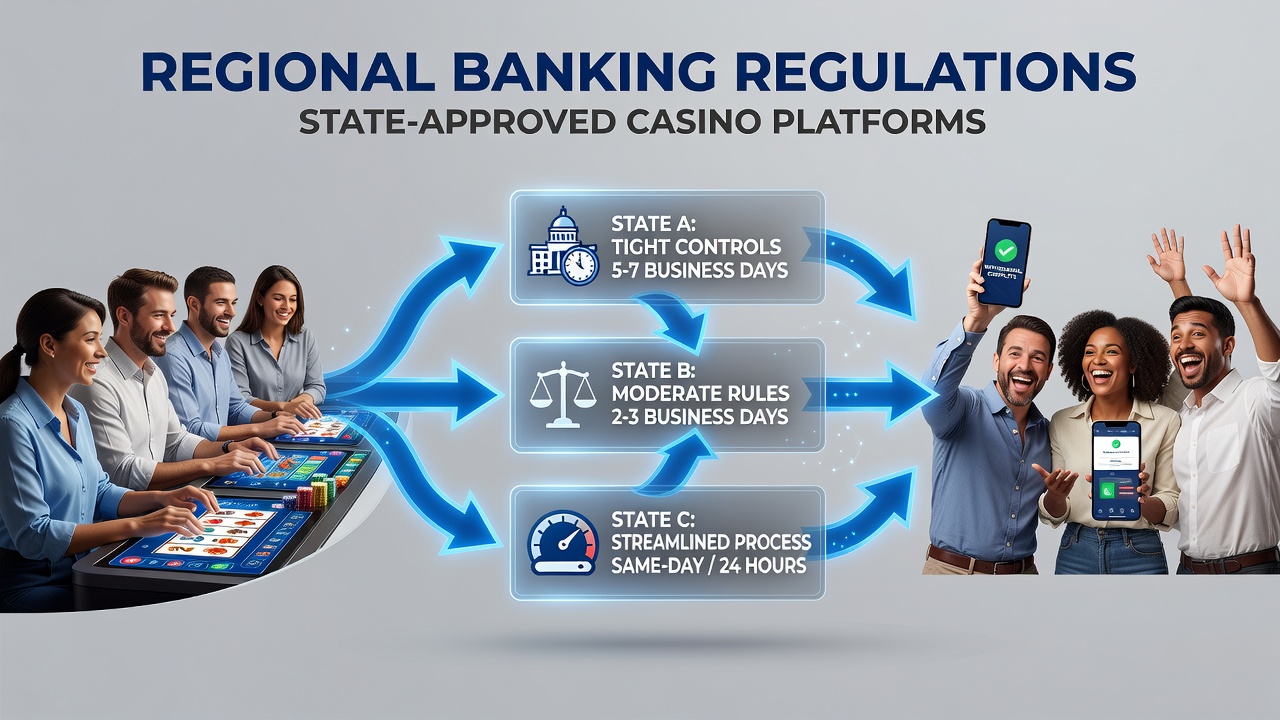
State banking regulations create distinct pathways for withdrawal processing at licensed casino platforms, and these rules vary sharply by jurisdiction while directly affecting how quickly funds reach player accounts. Data from multiple state gaming commissions shows that verification requirements, anti-money laundering protocols, and electronic funds transfer rules combine to set minimum and maximum timelines that operators must follow. Players in New Jersey often encounter different holding periods than those in Pennsylvania or Michigan because each state layers its own banking oversight onto federal guidelines.
State-Level Variations in Funds Transfer Rules
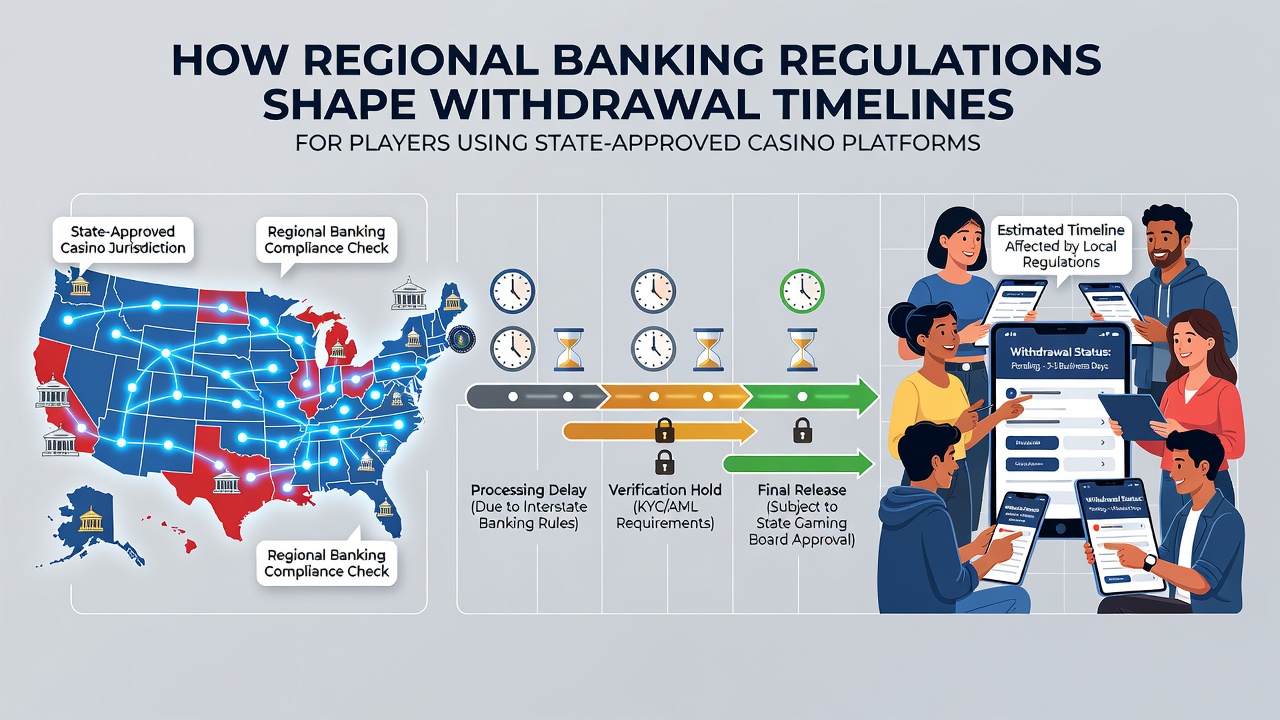
Banking oversight at the state level determines which payment rails casinos can use and how long each rail must remain under review before release. In New Jersey the Division of Gaming Enforcement requires operators to complete enhanced transaction monitoring for ACH transfers that exceed certain thresholds, and this monitoring adds one to three business days to standard processing windows. Michigan regulators apply similar scrutiny but tie the review period to the player's account age, so newer accounts face longer holds than established ones. Pennsylvania gaming authorities allow faster movement of smaller amounts yet impose stricter documentation checks on wire transfers that originate from out-of-state banks.
These differences emerge because each state interprets federal banking statutes through its own lens, and the resulting patchwork produces noticeable gaps in payout speed. Observers note that a player withdrawing via ACH in one state may wait five days while the same method clears in two days elsewhere, simply because the receiving bank must satisfy additional state-mandated compliance steps.
Impact of Verification and Compliance Layers
Know-your-customer and anti-money laundering rules sit at the center of every withdrawal timeline, yet the depth of these checks fluctuates with state policy. Platforms must confirm source of funds, match banking details, and sometimes obtain third-party verification before releasing winnings. In states with tighter integration between gaming and banking regulators, operators run automated flags that pause transfers until manual review completes, and this step routinely extends timelines by 24 to 72 hours. States that maintain separate oversight bodies see fewer pauses because data sharing between agencies reduces duplicate checks.
July 2026 brought updated reporting thresholds in several jurisdictions, and operators adjusted their internal systems to capture additional transaction metadata required by the new rules. Those adjustments temporarily lengthened processing windows until automation caught up, illustrating how regulatory changes ripple through existing payout infrastructure.
Payment Methods and Regulatory Constraints
ACH transfers remain the most common method across state-approved platforms, yet the regulatory treatment of these transfers differs enough to shift expected arrival dates. Some states require banks to hold gambling-related ACH credits for an extra clearing cycle, while others permit same-day posting once initial verification passes. Wire transfers move faster in most cases but trigger higher compliance thresholds that can offset the speed advantage. Cryptocurrency options appear in fewer states and face distinct rules that tie wallet approvals to state-specific licensing for digital asset custodians.
One study from the University of Nevada Reno examined payout data across three states and found that regulatory friction accounted for roughly 60 percent of the variance in average withdrawal times. The remaining difference stemmed from operator-specific procedures that still had to align with state banking standards. Those findings highlight how regional rules set the outer boundaries while platforms manage the details inside those boundaries.
Cross-Border Banking Interactions
Many players maintain accounts at banks headquartered outside their home state, and this arrangement introduces additional layers of regulatory alignment. A bank operating under federal charter must still honor the gaming-specific rules of the state where the casino is licensed, and this dual requirement often extends review periods. Data aggregation from multiple operators shows that out-of-state bank accounts experience average delays of one to two extra days compared with in-state accounts, because the receiving institution must reconcile two sets of compliance standards.
Industry reports from the American Gaming Association document similar patterns in states that expanded online offerings after 2020, confirming that banking geography remains a consistent factor in timeline calculations.
Conclusion
Regional banking regulations continue to define the outer limits of withdrawal timelines at state-approved casino platforms through layered verification, state-specific holding periods, and payment-rail restrictions. Data indicates that these rules evolve with new reporting requirements and technology upgrades, yet the core effect remains consistent: players experience different speeds depending on where the platform holds its license and which bank processes the transfer. Understanding these regional differences allows clearer expectations around when funds will arrive without relying on any single operator's internal schedule.